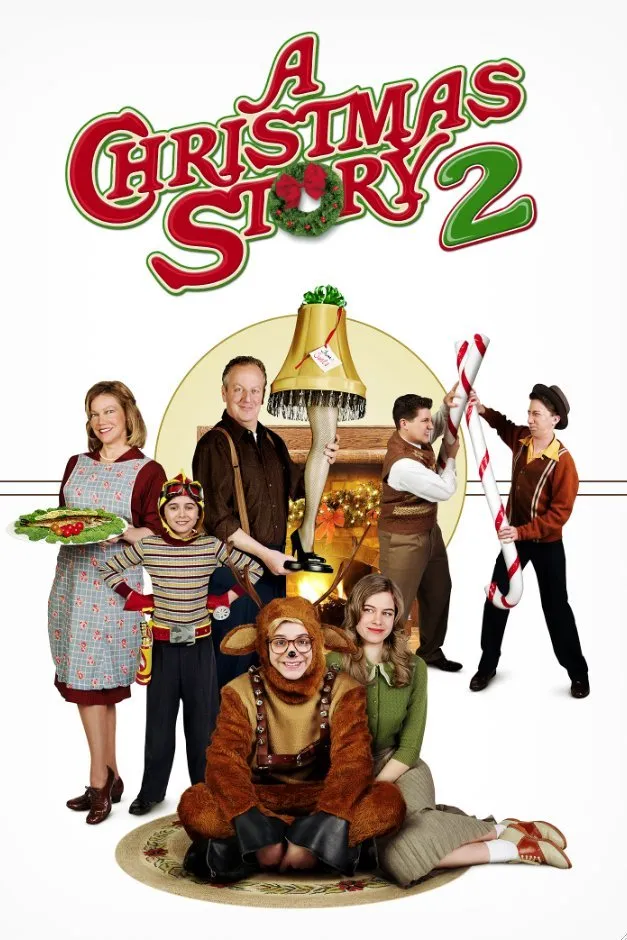
A Christmas Story 2
- Year
- 2012
About this movie
Direct-to-video sequel in which a teenage Ralphie wants a car for Christmas.
Plot summary
The film takes place in 1946, six years after the events of the original film. Ralphie is now fifteen years old, and all he wants is a used 1939 Mercury Eight convertible for Christmas. He tries testing the car out when he sees it on a display ramp, but he accidentally causes the car to roll back out of the used car lot and gently tap a light pole, causing a plastic reindeer to loosen and fall through the convertible top. Ralphie bands together with Flick and Schwartz to raise enough money to pay the dealer back for fixing it before Christmas so that the car dealer won't have Ralph arrested and presumably thrown in jail. He and his friends get a job and after going through several departments at the Higbee's store and in the end getting into a fight with the store Santa and then each other they all get fired. Ralphie does get his job back after some begging and pleading, but by Christmas Eve he finds he is still $1 short, so he and Flick rob Schwartz of his "lucky buck". While on the way to the dealer, Ralphie decides to donate a chunk for a less fortunate family. He winds up still off the hook with the owner of the dealership. In the end, he does get the car he wants for Christmas and the girlfriend he wants to go with it.
From the Wikipedia article “A Christmas Story 2”, licensed CC BY-SA 4.0. Continue reading on Wikipedia
Details
- Holiday
- Christmas
- Archive type
- Movie
- Franchise
- A Christmas Story
Credits
- Brian Levant Director
Where to watch
Find where to stream it Searches JustWatch
Memories
Personal recollections. They never change the facts above, but they’re why the archive exists.
Sign in to share what you remember
No memories yet. Be the first to share one.
Questions about this work
Was it sold at Kmart or Sears? Was there a green variation? Ask the collectors.
Sign in to ask the community.
More Christmas movies




Sources & verification
No sources cited yet. Catalog pages, ads, packaging, and UPC labels all count as evidence.